

Field to Frame
Field to Frame
Deconstructing Your Bridal Bouquet
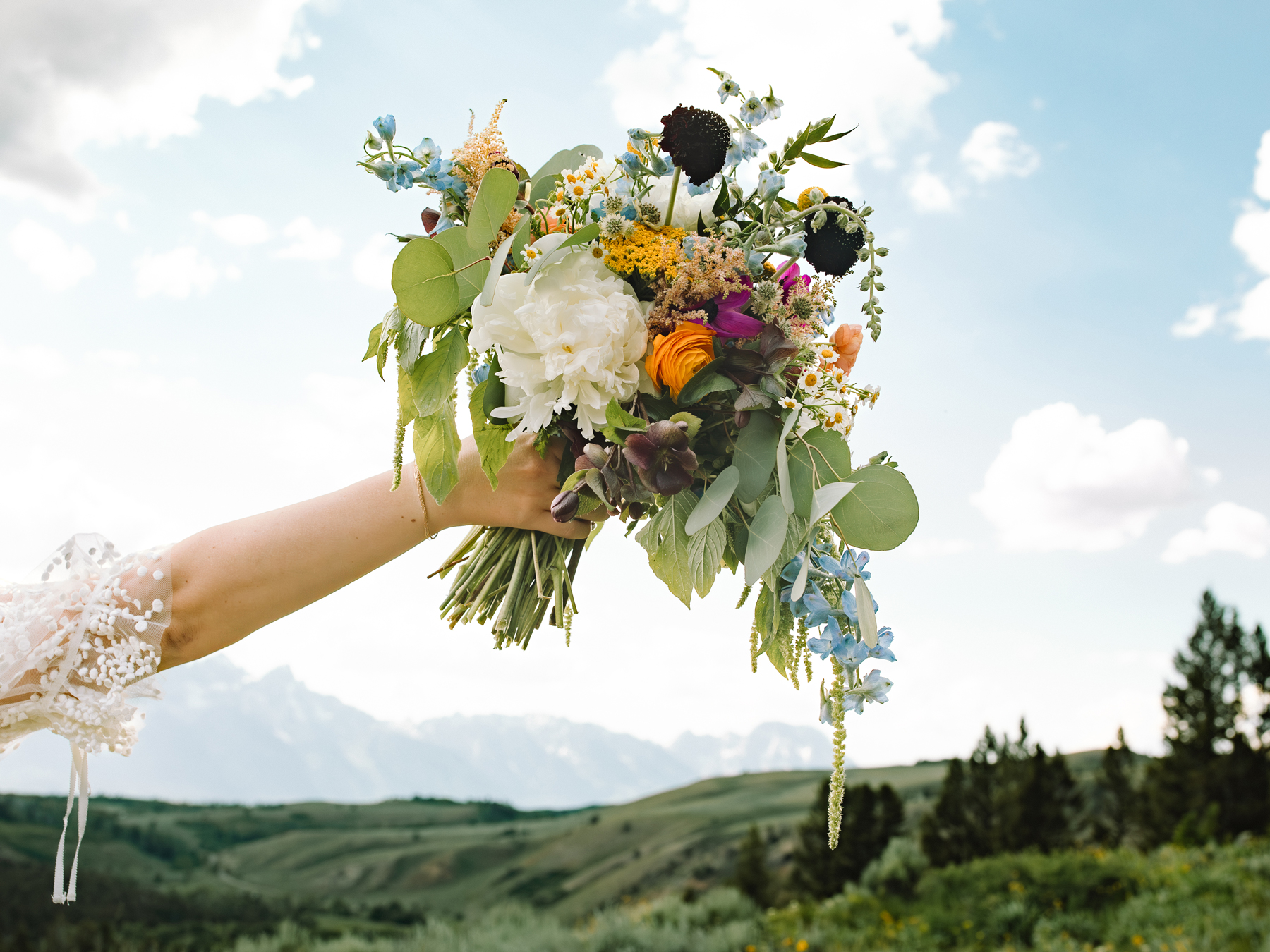
Words by Christina Shepherd McGuire
One outdated wedding tradition involves the bride tossing her bouquet into a crowd of her single besties in the hopes that the person who catches it will be the next to marry. This historical baggage — stemming from a European tradition that had guests trying to tear pieces from the bride’s dress for good luck, forcing the bride to toss her bouquet as a distraction — has certainly lost its context. And along with it went the garter toss, throwing rice at the recessional, and automatically taking the groom’s last name.
Today’s brides opt to preserve, repurpose, or deconstruct their bouquets instead to savor the day’s memories long after the flowers wilt. Creating a timestamped work of art (similar to a commissioned painting or custom-made jewelry) provides a daily reminder of the special union between a married couple, one that can easily fit into the modern-day world.
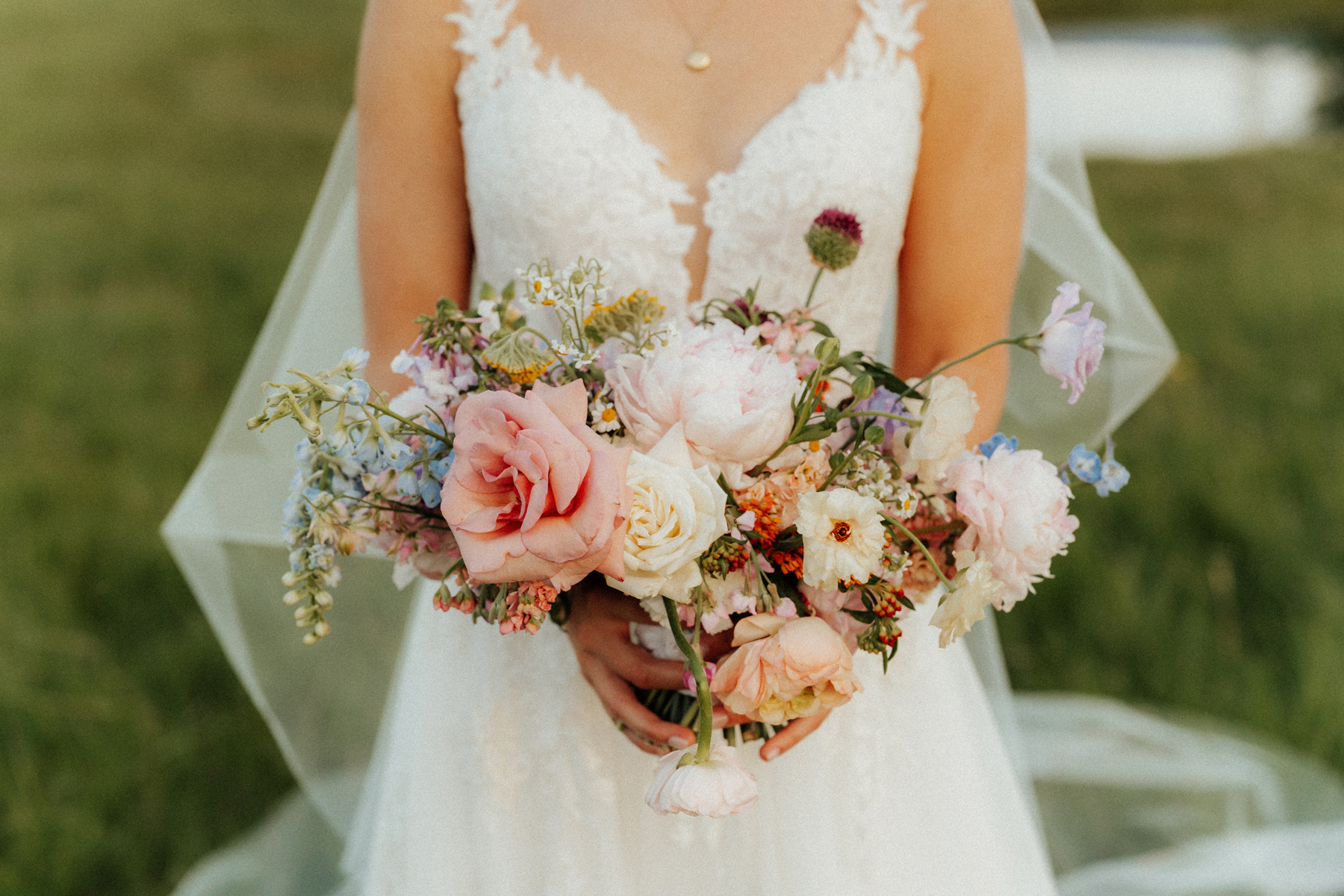
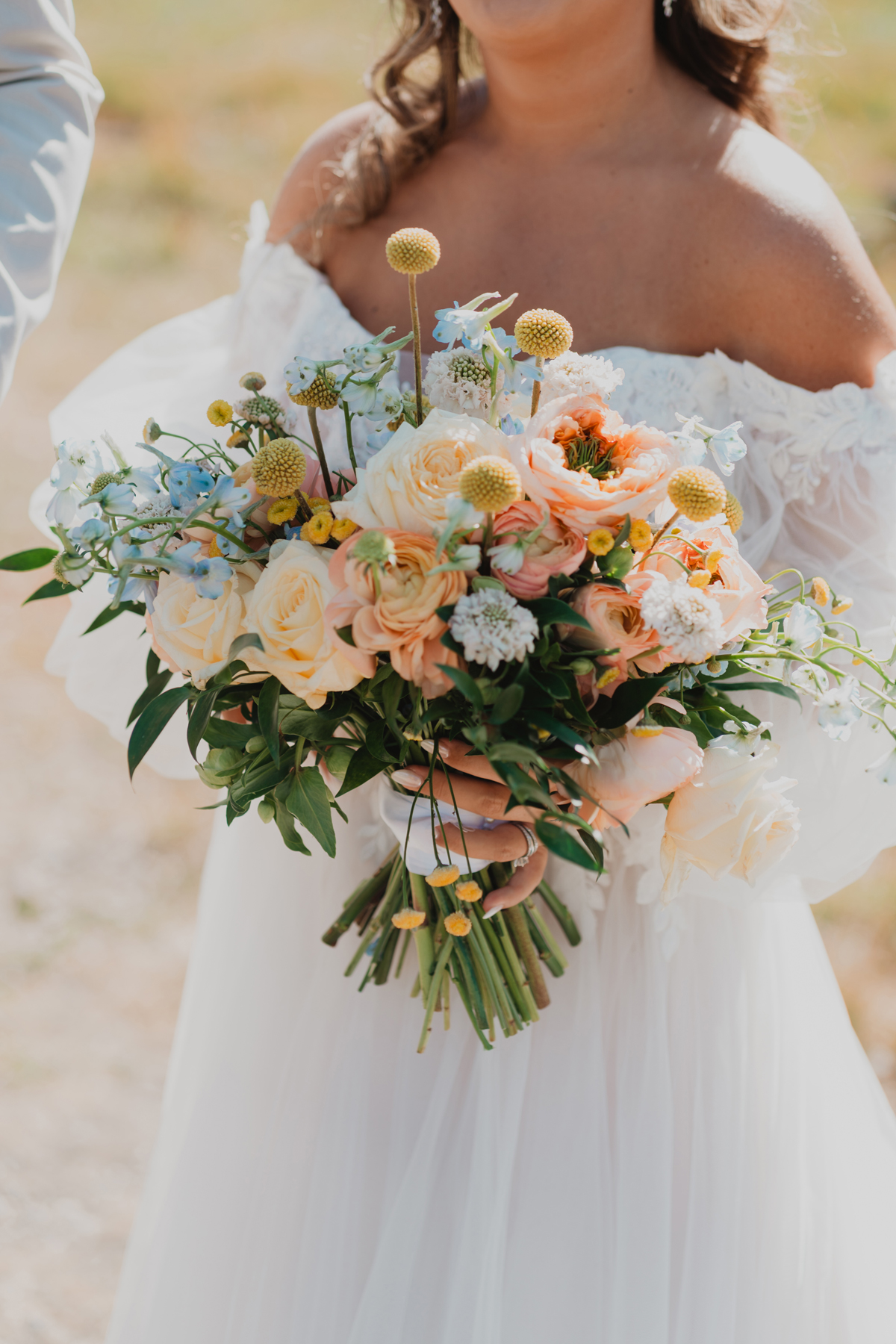
Christine Schnier landed on the idea of “deconstructed bouquets” after obtaining flowers for her own wedding from Full Circle Farm in Victor, Idaho. After the celebration was over, she noticed a couple on Instagram who pressed wedding bouquet flowers and decided to try it herself.
“I went down this rabbit hole of realizing there was a whole industry in this field, so I pressed my own [bouquet] for fun, and it spiraled from there,” she explains of how her business, Farmed Framed Florals, was born.
Schnier then began to forage and press wildflowers during the summer, making greeting cards on acid-free paper and brass-framed individual flowers. Her greeting cards serve as wedding invitations, thank-you notes, escort cards, and table placement cards.
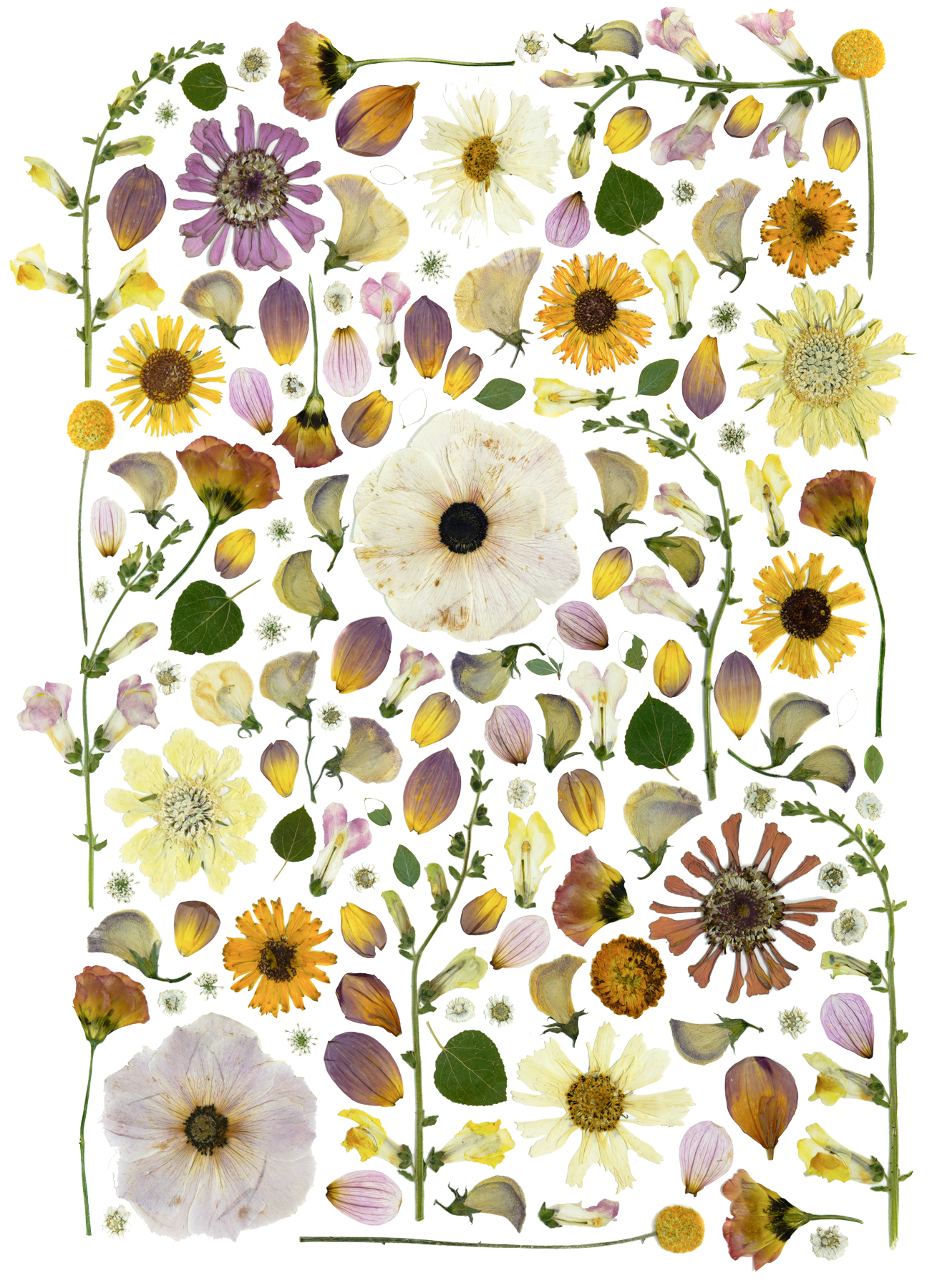
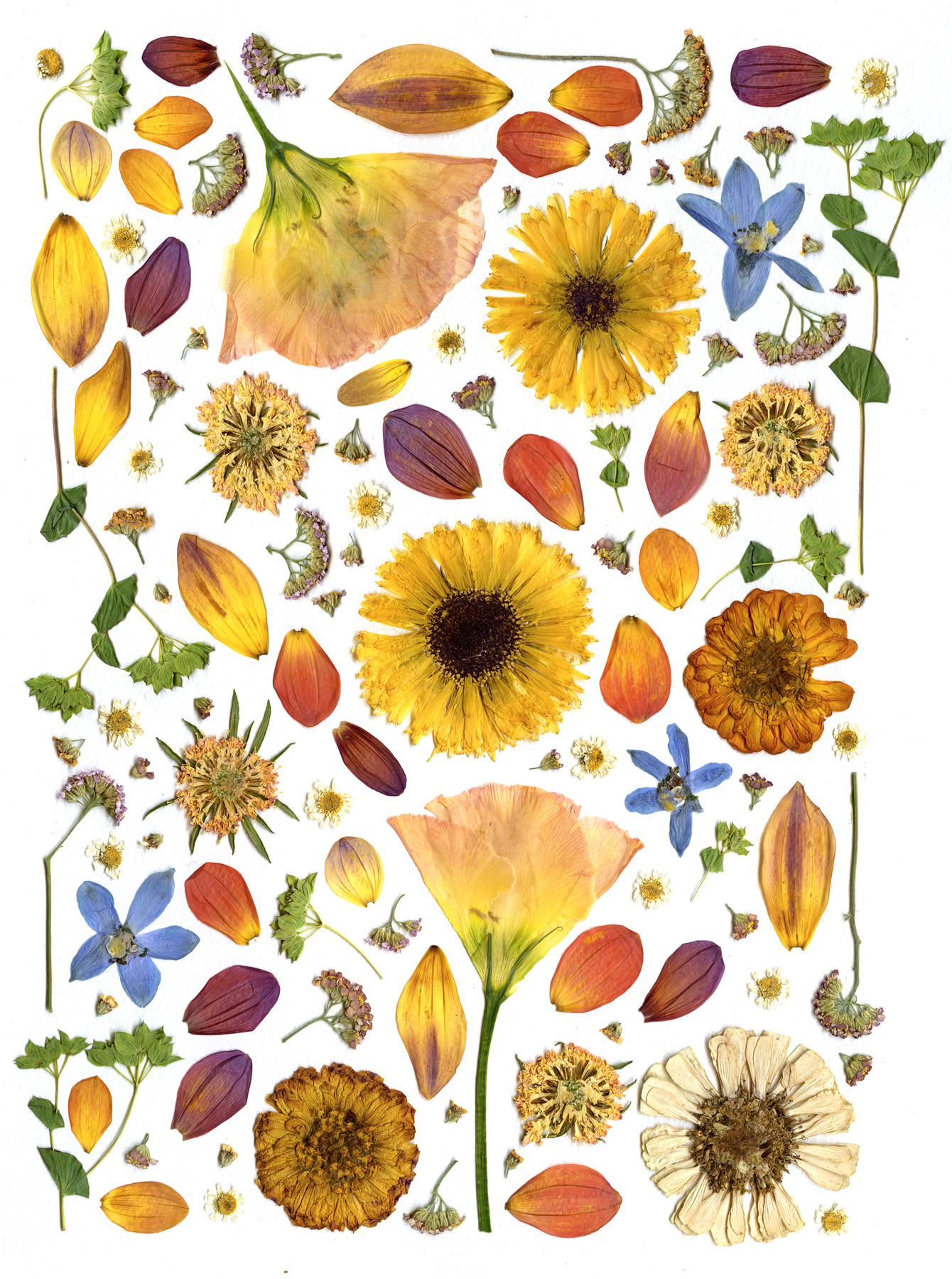
Schnier’s pressed wildflowers live on a wall in her shed-turned-studio in Driggs, Idaho, held in a giant mail sorter and organized by species. On the table beside the sorter stands a robust flower press, made from Baltic birch plywood, usually housing individual pressed flowers from a recent bouquet.
“One bouquet may end up being three or four flower presses big, depending on how thick the flowers are,” says Schnier.
She explains that as time goes on and the moisture is removed from the flowers, the presses condense and can accommodate more layers. A general flower press layer is made up of flowers surrounded by layers of paper, then sandwiched between chipboard.
“The process itself takes anywhere from five to 10 days and involves swapping out different layers with fresh layers [of paper], which removes the moisture and kills any bugs that might be left in them,” she says.
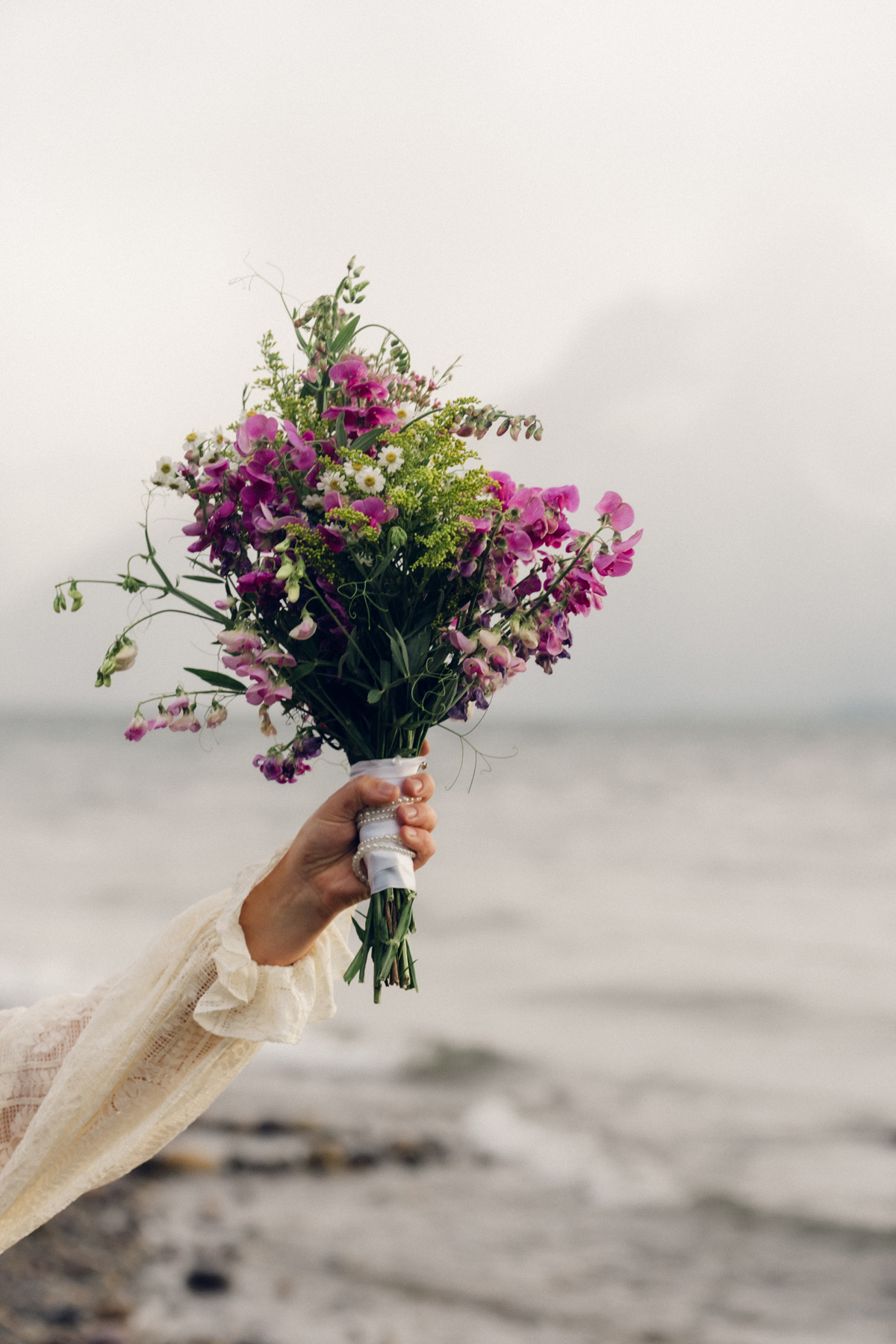
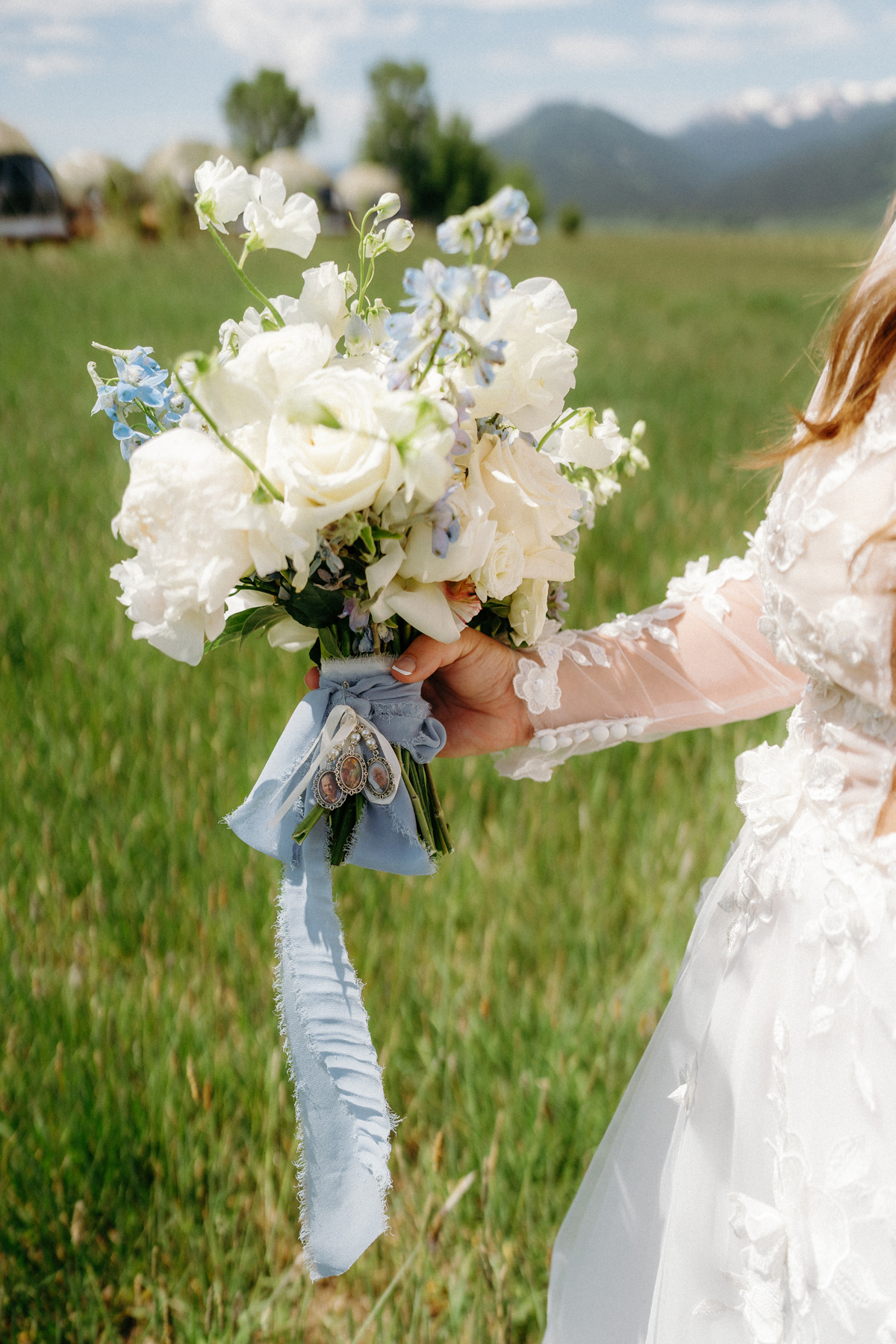
Once commissioned to make a framed piece of art, Schnier arrives on site to retrieve the bouquet, as well as a few table arrangements (which tend to be fresher because they are kept in water).
Back at her shop, she presses the flowers and lays each one out in an artistic pattern that resembles the bridal bouquet in its prime. Countless hours go into the end product, as certain flowers need to be recreated petal by petal, producing a piece of art that is truly one-of-a-kind.
Schnier says couples enjoy her reproductions because they offer something that’s “a little more unique to remember their special day.
“I feel like so much time passes, and you forget all the little details, like what the flowers looked like,” she says. A deconstructed bouquet creates a memory that’s different from photos, video, or another commissioned work of art.
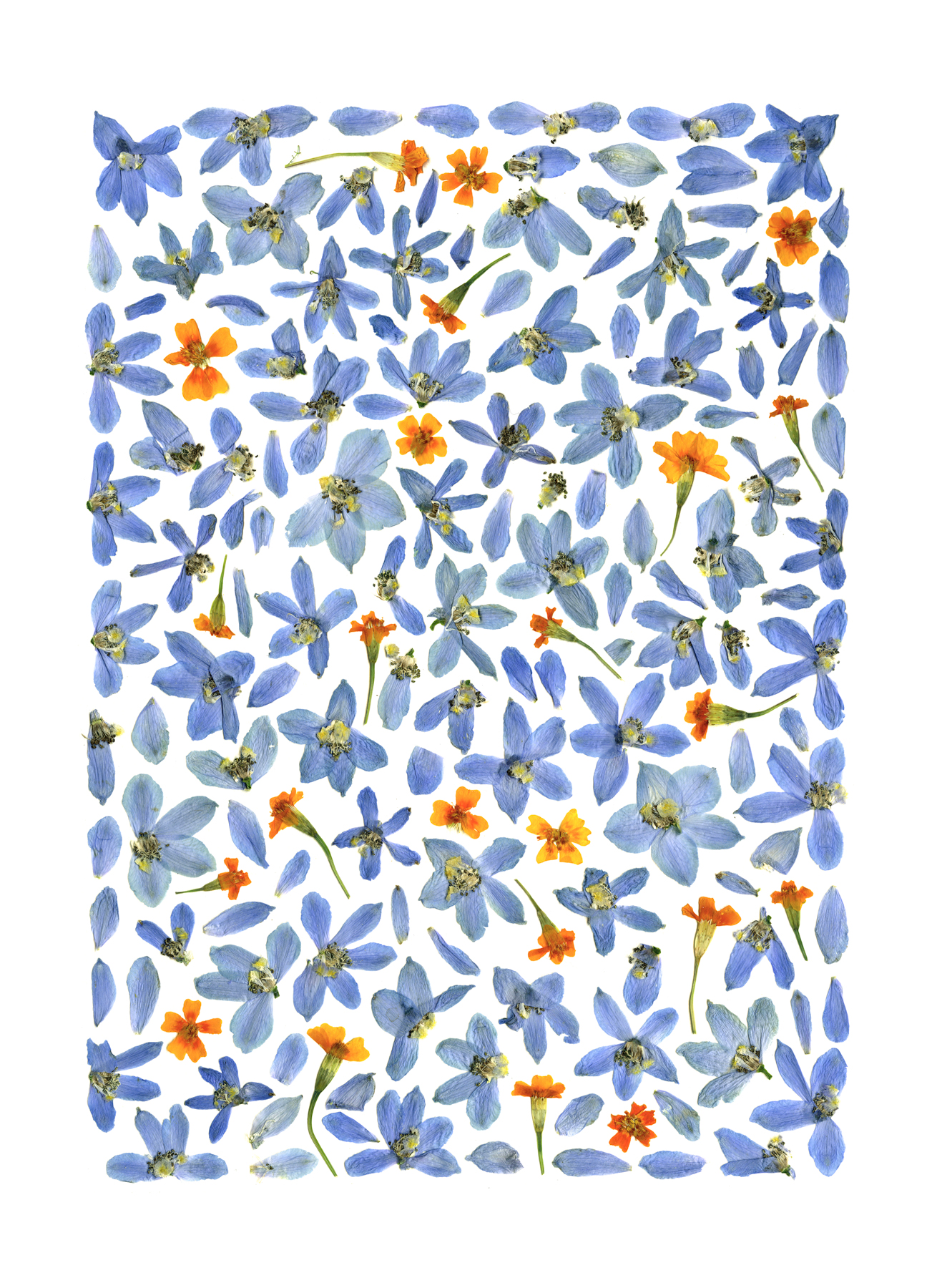
Schnier explains the difference between a deconstructed bouquet and a dried bridal bouquet, noting that the three-dimensional version requires preserving the flowers in resin or spraying them with chemicals to maintain them. Her pressing process, on the other hand, doesn’t require toxic products. And while she aims to work solely with flowers from local farms, she would consider working with commercially sourced flowers, depending on the species and how they would press.
Her mission is clear: “Working with sustainable local flower farms is important to me, as well as helping the local community by working with small businesses,” she says, “I work with Rocky [Vertone] of Full Circle Frameworks in Jackson, and Scott Davidson at Mountain Stash Print House, who creates fine art prints of the deconstructed bouquets.” Some couples opt for both the two-dimensional framed piece and a print.
“The colors [in the deconstructed piece] are inevitably going to fade,” says Schnier, “so it’s cool to be able to have the full color in the print while watching the natural one fade as time goes on.”
Deconstructed bouquets give couples a way to move away from customs, such as tossing a bridal bouquet, which discards resources, and adopt new traditions, like sustainable decor and local farm-to-table dining, that are better suited to the times.
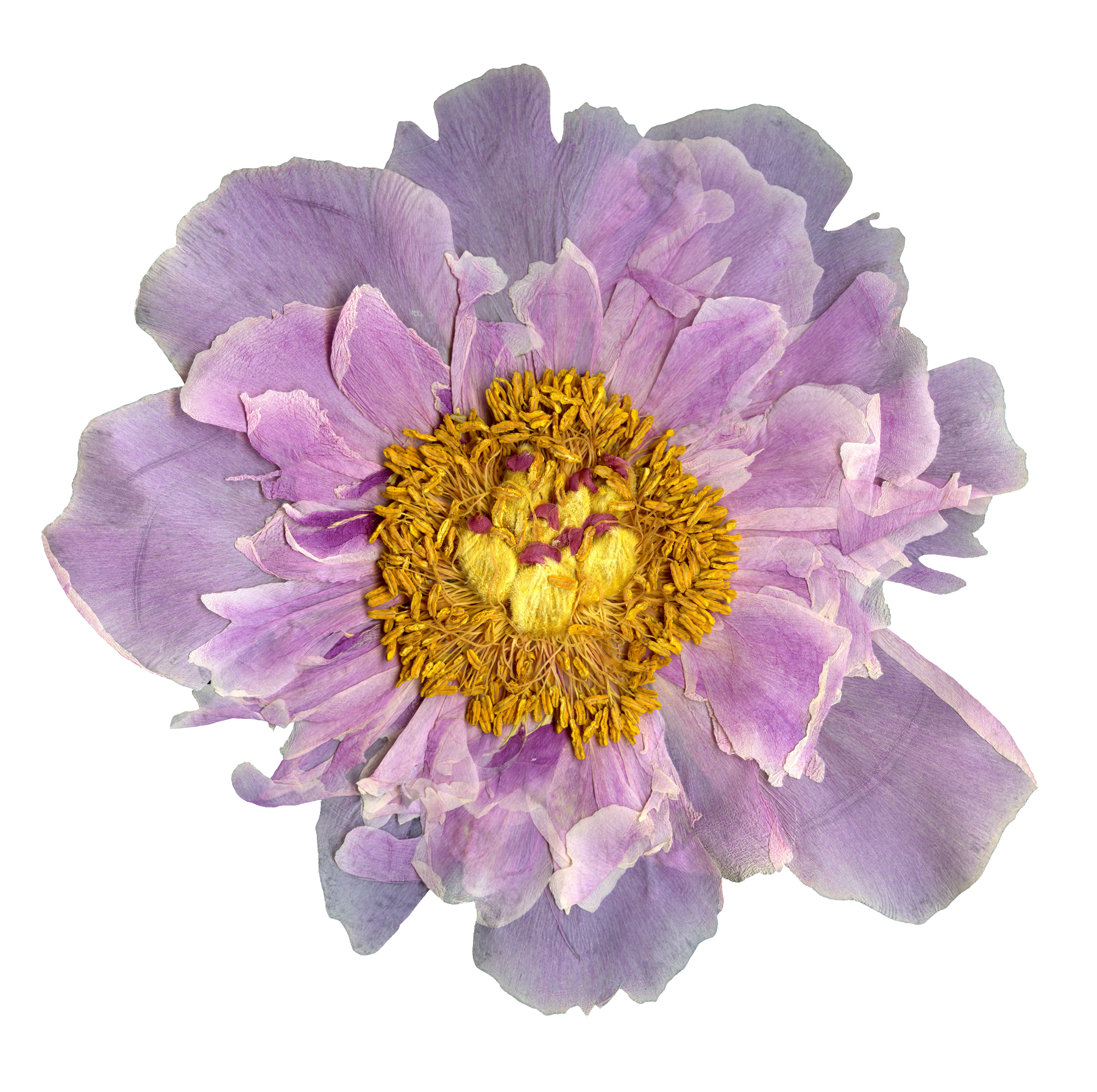
View samples of Christine Schnier’s work at Elevation Hair Studio in Jackson.